Rising damp and hygroscopic salts, hygroscopic salts and rising damp…….confused?! It would also seem that there are many so called damp specialist surveyors that are also confused!
I received a phone call from a worried son, his elderly mother had been told she had a rising damp problem in her residential house in Trowbridge Wiltshire, he explained to me how there is no visible damp on the walls, and that a ‘damp specialist surveyor’ had told his mother virtually the whole house is suffering from rising damp and that the cost of the damp proofing would be over 10k. For some strange reason they also wanted to tank all the walls, and a new damp proof course and associated re-plastering system.
This is quite a familiar problem with damp surveyors that don’t understand the limitations of a damp meter, if there is no visible problems and low readings in masonry (below 20 wme), and low readings (below 20%) in any adjacent timber skirting / door linings then it is most probably a small amount of hygroscopic salt that has been left behind from previous rising dampness.
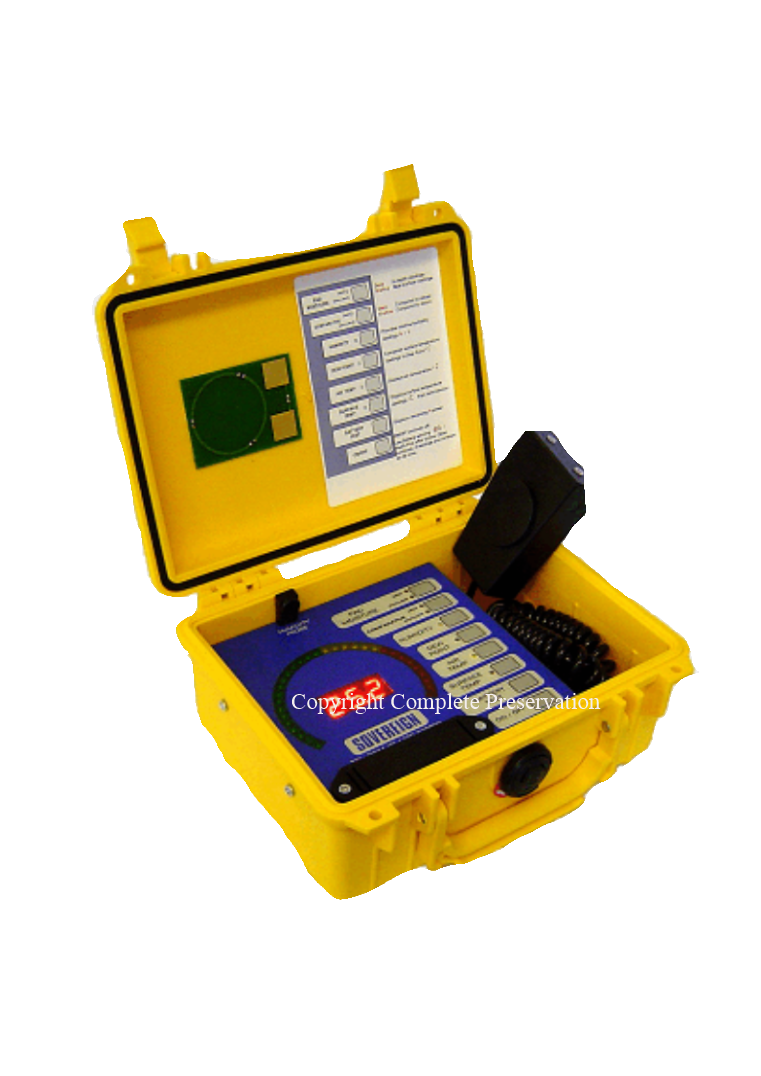
I understand the Sovereign damp meter below was used for the rising damp survey in Trowbridge Wiltshire, this can’t be used quantitatively to diagnose rising damp. Most honest damp specialist surveyors have good intentions, however some have no qualifications and just have an approved membership from a chemical company, so perhaps as they have no qualifications they think the diagnosis that they have interpreted is correct.
Her son had been doing his research on the internet and found us, when he contacted me, and he specifically asked for a survey that would include plaster sampling (BRE DIGEST 245) to find out exactly what was going on. He then proceeded to tell me the story of how his mother has been left petrified of this rising damp problem thinking that she is going to have to spend thousands of pounds on damp proofing and possibly lose the sell of her property.
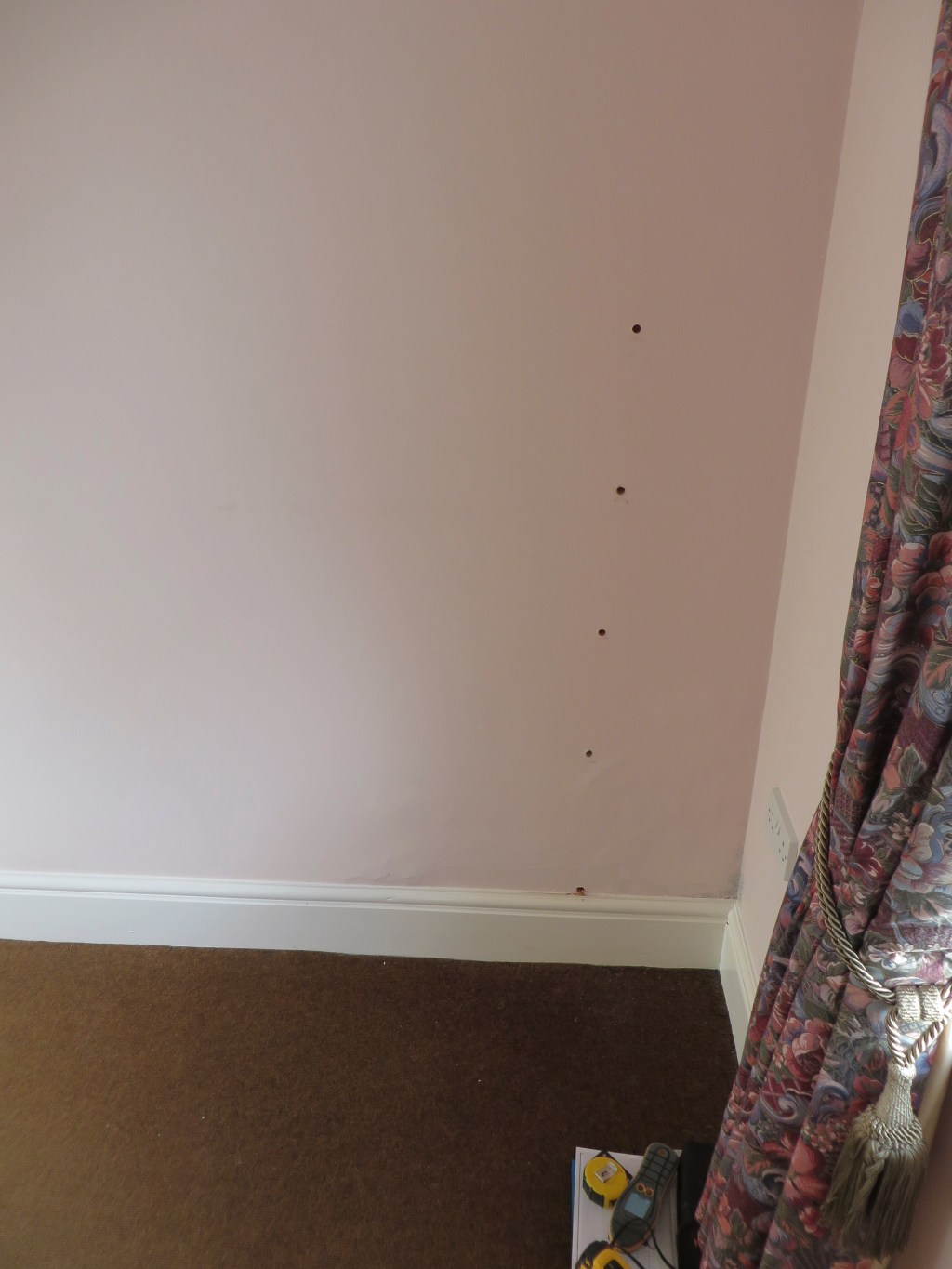
The below picture the lady was told is the dampest wall in the property, an internal wall also. The below picture shows the plaster samples to around 1000mm, this height was determined using deep wall probes and going past any elevated readings to ensure correct diagnosis.
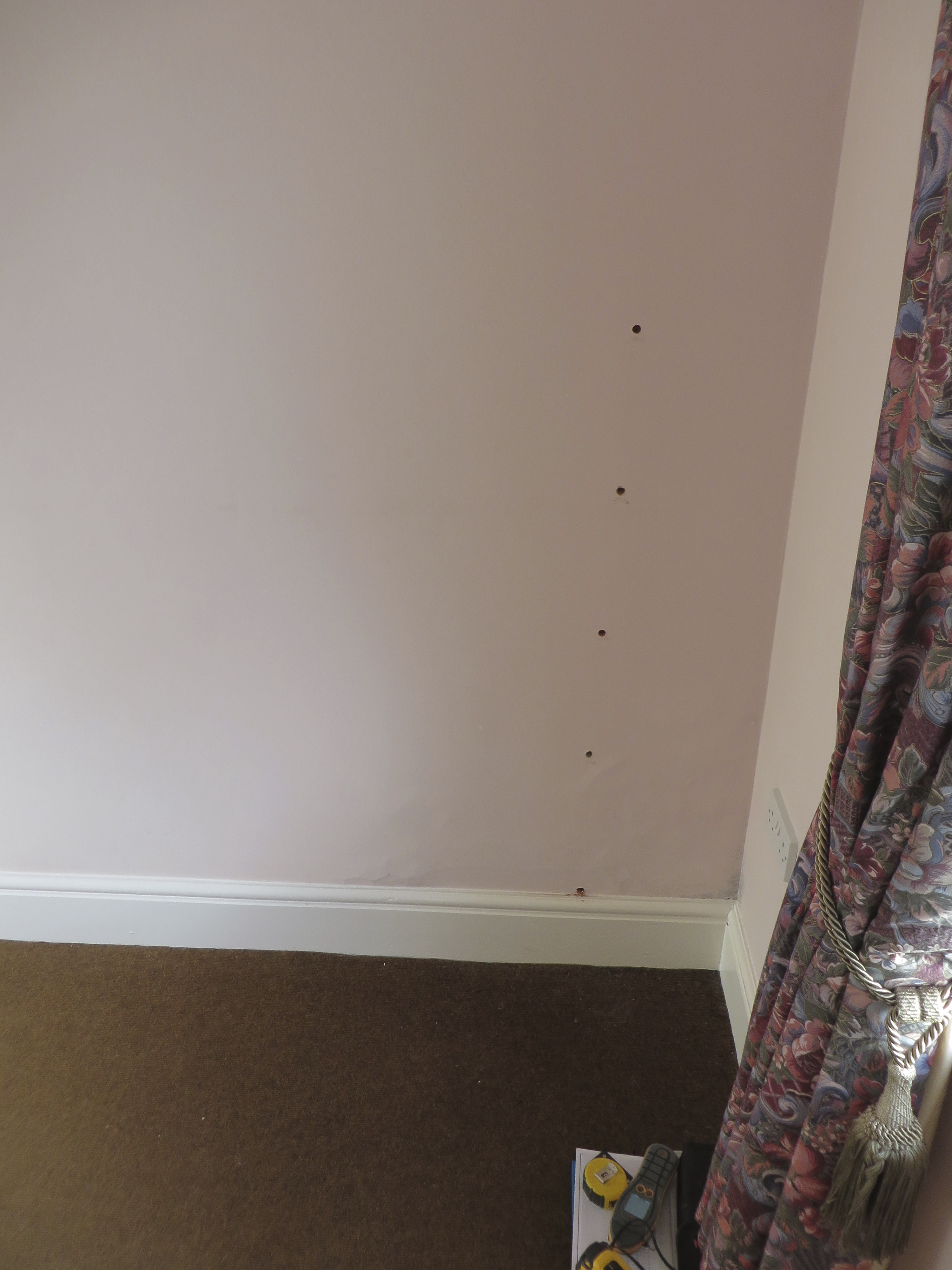
The circular holes indicate where the gravimetric profile was drilled at depth in the wall. Normally I would remove the skirting board, in this case though I left it on as I drilled at an angle behind the skirting towards the floor, I chose this method as it would cause the least amount of disruption possible.
Data collection
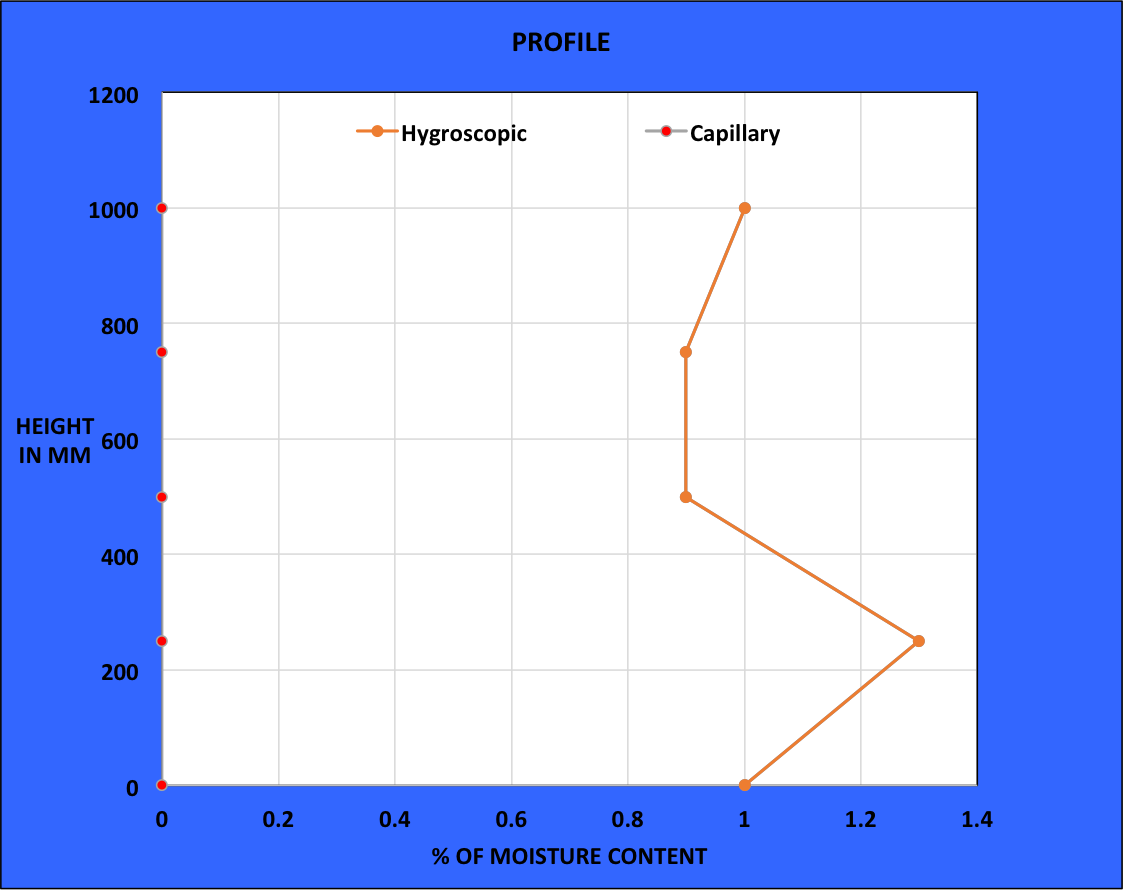
The below graph shows that there is no (0) amount of capillary moisture in the wall (free moisture) it is bone dry, and at 250mm there is 1.3% of hygroscopic salts present, this being a very small amount of nitrate present. This is where the highest readings were noted on the plastered finish.
Lots of older buildings will have possibly had a rising damp problem over the years, this might still be active or simply gone away, if it has, it may have left the hygroscopic salts behind. If the rising damp has disappeared and your only left with even a small amount of hygroscopic salts these will make a damp meter beep like mad.
So how do you know that you have just salts and no hygroscopic salts? A damp meter will not be able to tell you, you will need plaster samples taken to determine this as above.
So if the wall looks dry with no visible dampness problems it probably is, but any high readings could be from hygroscopic salts. It isn’t unusual to find
original lime plastered walls with salt issues, perhaps though with a more recent modern re-plastering system this shouldn’t have occurred though. Low levels of hygroscopic salts can still visibly appear at times of high humidity, and may require re-plastering.
The good thing about the internet is that people can now show potential customers their shop window which is their website, this can be an all singing and dancing website… how do you know if this company is any good when there are thousands of so called damp proofing specialists?! I have personally found that we have more and more enquiries where people find us after doing their internet research, they specifically know that a destructive/invasive damp survey is needed most of the time to find the root cause of the rising dampness and not just a damp meter! I’m not knocking a damp meter, as it’s an excellent piece of kit especially for non destructive surveys, but even an expert to understand all the readings.
If you do require to understand exactly what is going on if you have a damp issue the only quantitative way to determine this is following the methodology in BRE Digest 245. This is the only way to determine the hygroscopic and the capillary moisture, this means if the wall is damp from moisture, and or hygroscopic salts.
This video explains bridging of the damp proof course, and the questions you need to ask a damp surveyor prior to arranging a damp survey.
https://www.youtube.com/watch?v=97yblxM5Ijc
Follow us on our social channels where you can get free tips on damp and building defect issues, and you can engage and get your questions answered.
TicTok
TikTokhttps://www.tiktok.com › @complet…Complete Preservation (@complete_preservation)
YouTube
https://youtube.com/@completepreservation
Instagram
https://instagram.com/complete_preservation?igshid=OGQ5ZDc2ODk2ZA==
LinkedIn
https://www.linkedin.com/in/ross-charters-85883b52
Facebook
https://www.facebook.com/complete.preservation/?locale=en_GB


 Welcome to Complete Preservations blog
Leave a comment