


Rising damp and hygroscopic salts, hygroscopic salts and rising damp…….confused?! It would also seem that there are many so called damp specialist surveyors that are also confused!
I received a phone call from a worried son, his elderly mother had been told she had a rising damp problem in her residential house in Trowbridge Wiltshire, he explained to me how there is no visible damp on the walls, and that a ‘damp specialist surveyor’ had told his mother virtually the whole house is suffering from rising damp and that the cost of the damp proofing would be over 10k. For some strange reason they also wanted to tank all the walls, and a new damp proof course and associated re-plastering system.
This is quite a familiar problem with damp surveyors that don’t understand the limitations of a damp meter, if there is no visible problems and low readings in masonry (below 20 wme), and low readings (below 20%) in any adjacent timber skirting / door linings then it is most probably a small amount of hygroscopic salt that has been left behind from previous rising dampness.
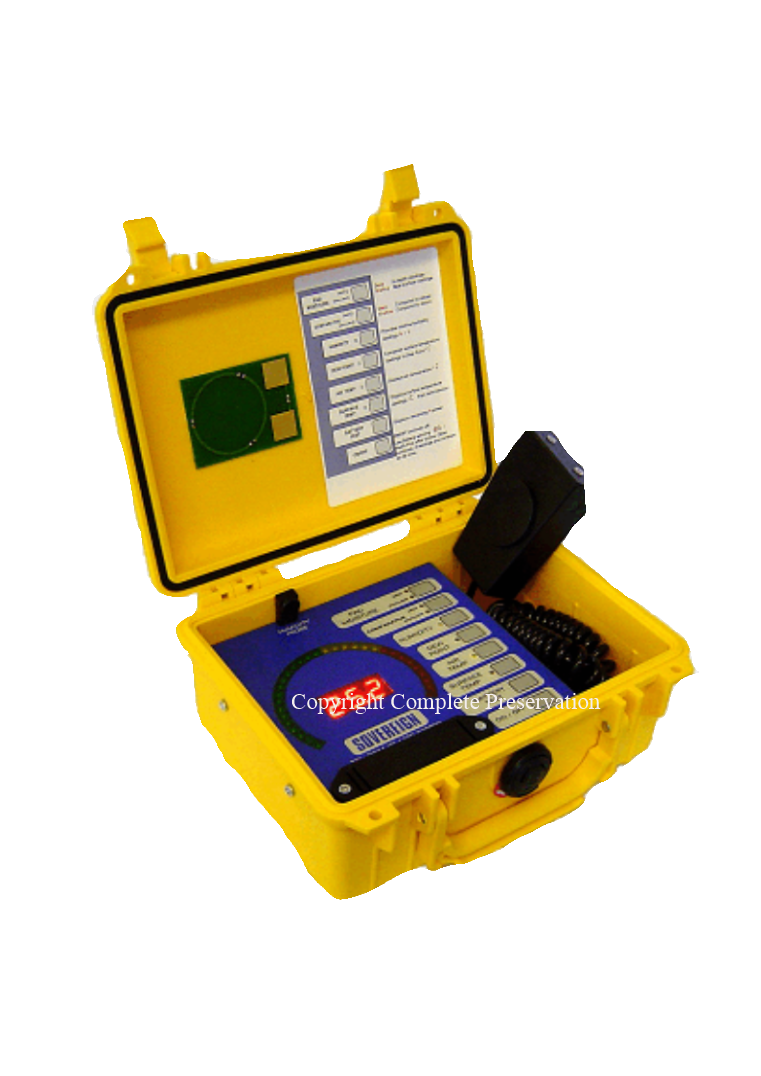
I understand the Sovereign damp meter below was used for the rising damp survey in Trowbridge Wiltshire, this can’t be used quantitatively to diagnose rising damp. Most honest damp specialist surveyors have good intentions, however some have no qualifications and just have an approved membership from a chemical company, so perhaps as they have no qualifications they think the diagnosis that they have interpreted is correct.
 Her son had been doing his research on the internet and found us, when he contacted me, and he specifically asked for a survey that would include plaster sampling (BRE DIGEST 245) to find out exactly what was going on. He then proceeded to tell me the story of how his mother has been left petrified of this rising damp problem thinking that she is going to have to spend thousands of pounds on damp proofing and possibly lose the sell of her property.
The below picture the lady was told is the dampest wall in the property, an internal wall also. The below picture shows the plaster samples to around 1000mm, this height was determined using deep wall probes and going past any elevated readings to ensure correct diagnosis.
Her son had been doing his research on the internet and found us, when he contacted me, and he specifically asked for a survey that would include plaster sampling (BRE DIGEST 245) to find out exactly what was going on. He then proceeded to tell me the story of how his mother has been left petrified of this rising damp problem thinking that she is going to have to spend thousands of pounds on damp proofing and possibly lose the sell of her property.
The below picture the lady was told is the dampest wall in the property, an internal wall also. The below picture shows the plaster samples to around 1000mm, this height was determined using deep wall probes and going past any elevated readings to ensure correct diagnosis.
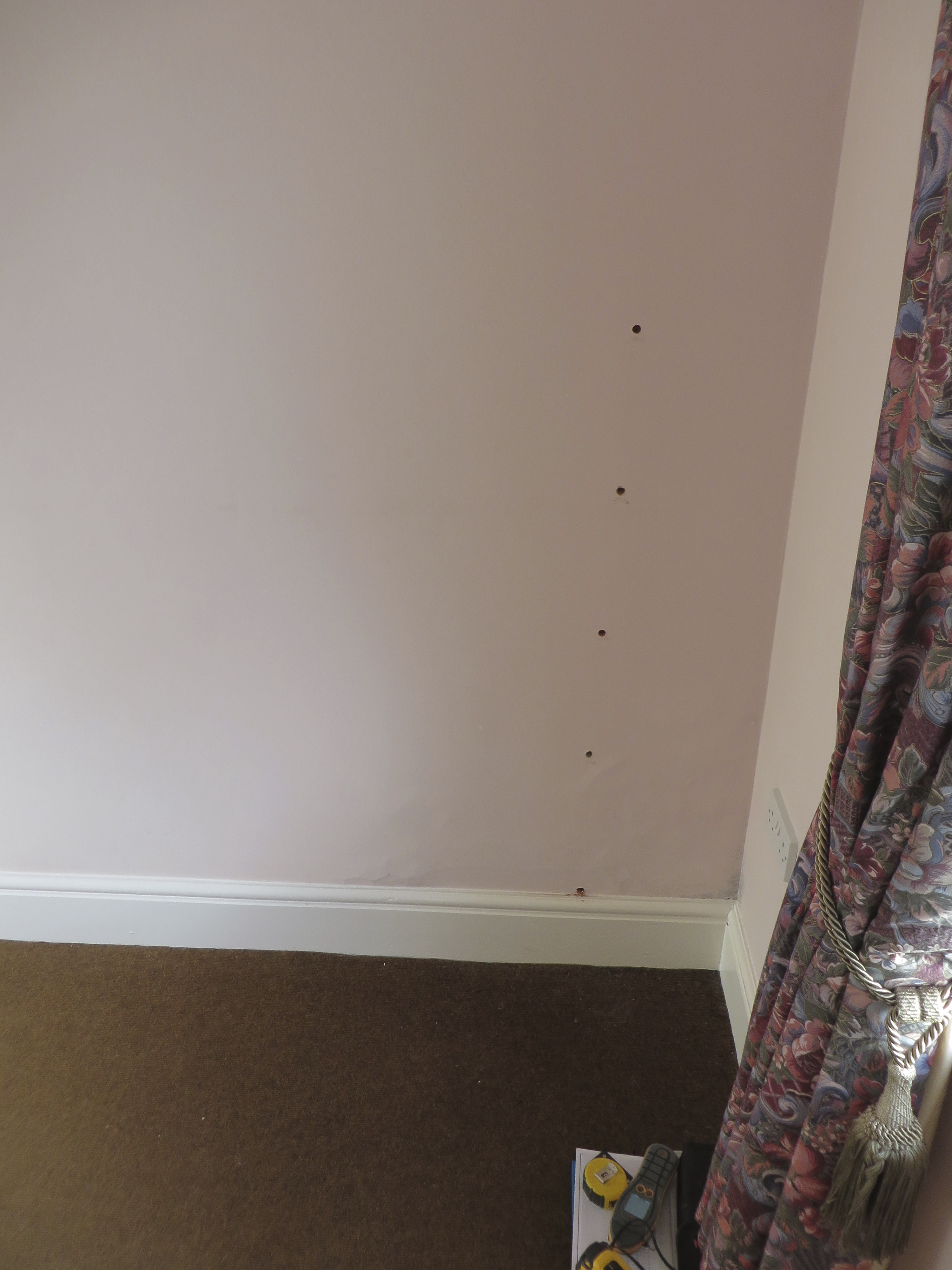 The circular holes indicate where the gravimetric profile was drilled at depth in the wall. Normally I would remove the skirting board, in this case though I left it on as I drilled at an angle behind the skirting towards the floor, I chose this method as it would cause the least amount of disruption possible.
Data collection
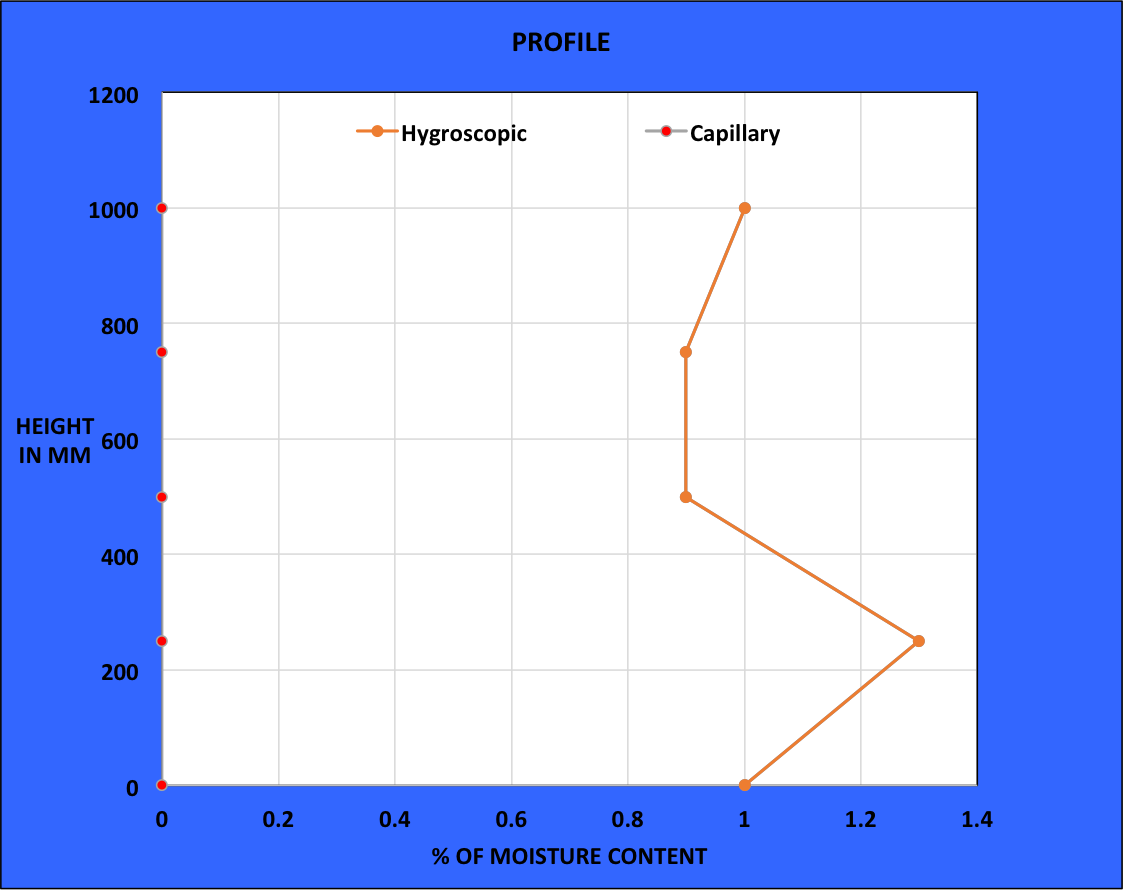
The below graph shows that there is no (0) amount of capillary moisture in the wall (free moisture) it is bone dry, and at 250mm there is 1.3% of hygroscopic salts present, this being a very small amount of nitrate present. This is where the highest readings were noted on the plastered finish.
Lots of older buildings will have possibly had a rising damp problem over the years, this might still be active or simply gone away, if it has, it may have left the hygroscopic salts behind. If the rising damp has disappeared and your only left with even a small amount of hygroscopic salts these will make a damp meter beep like mad.
The circular holes indicate where the gravimetric profile was drilled at depth in the wall. Normally I would remove the skirting board, in this case though I left it on as I drilled at an angle behind the skirting towards the floor, I chose this method as it would cause the least amount of disruption possible.
Data collection
The below graph shows that there is no (0) amount of capillary moisture in the wall (free moisture) it is bone dry, and at 250mm there is 1.3% of hygroscopic salts present, this being a very small amount of nitrate present. This is where the highest readings were noted on the plastered finish.
Lots of older buildings will have possibly had a rising damp problem over the years, this might still be active or simply gone away, if it has, it may have left the hygroscopic salts behind. If the rising damp has disappeared and your only left with even a small amount of hygroscopic salts these will make a damp meter beep like mad.
 So how do you know that you have just salts and no hygroscopic salts? A damp meter will not be able to tell you, you will need plaster samples taken to determine this as above.
So if the wall looks dry with no visible dampness problems it probably is, but any high readings could be from hygroscopic salts. It isn’t unusual to find original lime plastered walls with salt issues, perhaps though with a more recent modern re-plastering system this shouldn’t have occurred though. Low levels of hygroscopic salts can still visibly appear at times of high humidity, and may require re-plastering.
The good thing about the internet is that people can now show potential customers their shop window which is their website, this can be an all singing and dancing website… how do you know if this company is any good when there are thousands of so called damp proofing specialists?! I have personally found that we have more and more enquiries where people find us after doing their internet research, they specifically know that a destructive/invasive damp survey is needed most of the time to find the root cause of the rising dampness and not just a damp meter! I’m not knocking a damp meter, as it’s an excellent piece of kit especially for non destructive surveys, but even an expert to understand all the readings.
If you do require to understand exactly what is going on if you have a damp issue the only quantitative way to determine this is following the methodology in BRE Digest 245. This is the only way to determine the hygroscopic and the capillary moisture, this means if the wall is damp from moisture, and or hygroscopic salts.
This video explains bridging of the damp proof course, and the questions you need to ask a damp surveyor prior to arranging a damp survey.
https://www.youtube.com/watch?v=97yblxM5Ijc
Follow us on our social channels where you can get free tips on damp and building defect issues, and you can engage and get your questions answered.
TicTok
TikTokhttps://www.tiktok.com › @complet…Complete Preservation (@complete_preservation)
YouTube
https://youtube.com/@completepreservation
Instagram
https://instagram.com/complete_preservation?igshid=OGQ5ZDc2ODk2ZA==
LinkedIn
https://www.linkedin.com/in/ross-charters-85883b52
Facebook
https://www.facebook.com/complete.preservation/?locale=en_GB
So how do you know that you have just salts and no hygroscopic salts? A damp meter will not be able to tell you, you will need plaster samples taken to determine this as above.
So if the wall looks dry with no visible dampness problems it probably is, but any high readings could be from hygroscopic salts. It isn’t unusual to find original lime plastered walls with salt issues, perhaps though with a more recent modern re-plastering system this shouldn’t have occurred though. Low levels of hygroscopic salts can still visibly appear at times of high humidity, and may require re-plastering.
The good thing about the internet is that people can now show potential customers their shop window which is their website, this can be an all singing and dancing website… how do you know if this company is any good when there are thousands of so called damp proofing specialists?! I have personally found that we have more and more enquiries where people find us after doing their internet research, they specifically know that a destructive/invasive damp survey is needed most of the time to find the root cause of the rising dampness and not just a damp meter! I’m not knocking a damp meter, as it’s an excellent piece of kit especially for non destructive surveys, but even an expert to understand all the readings.
If you do require to understand exactly what is going on if you have a damp issue the only quantitative way to determine this is following the methodology in BRE Digest 245. This is the only way to determine the hygroscopic and the capillary moisture, this means if the wall is damp from moisture, and or hygroscopic salts.
This video explains bridging of the damp proof course, and the questions you need to ask a damp surveyor prior to arranging a damp survey.
https://www.youtube.com/watch?v=97yblxM5Ijc
Follow us on our social channels where you can get free tips on damp and building defect issues, and you can engage and get your questions answered.
TicTok
TikTokhttps://www.tiktok.com › @complet…Complete Preservation (@complete_preservation)
YouTube
https://youtube.com/@completepreservation
Instagram
https://instagram.com/complete_preservation?igshid=OGQ5ZDc2ODk2ZA==
LinkedIn
https://www.linkedin.com/in/ross-charters-85883b52
Facebook
https://www.facebook.com/complete.preservation/?locale=en_GB
Her son had been doing his research on the internet and found us, when he contacted me, and he specifically asked for a survey that would include plaster sampling (BRE DIGEST 245) to find out exactly what was going on. He then proceeded to tell me the story of how his mother has been left petrified of this rising damp problem thinking that she is going to have to spend thousands of pounds on damp proofing and possibly lose the sell of her property.
The below picture the lady was told is the dampest wall in the property, an internal wall also. The below picture shows the plaster samples to around 1000mm, this height was determined using deep wall probes and going past any elevated readings to ensure correct diagnosis.
The circular holes indicate where the gravimetric profile was drilled at depth in the wall. Normally I would remove the skirting board, in this case though I left it on as I drilled at an angle behind the skirting towards the floor, I chose this method as it would cause the least amount of disruption possible.
Data collection
The below graph shows that there is no (0) amount of capillary moisture in the wall (free moisture) it is bone dry, and at 250mm there is 1.3% of hygroscopic salts present, this being a very small amount of nitrate present. This is where the highest readings were noted on the plastered finish.
Lots of older buildings will have possibly had a rising damp problem over the years, this might still be active or simply gone away, if it has, it may have left the hygroscopic salts behind. If the rising damp has disappeared and your only left with even a small amount of hygroscopic salts these will make a damp meter beep like mad.
So how do you know that you have just salts and no hygroscopic salts? A damp meter will not be able to tell you, you will need plaster samples taken to determine this as above.
So if the wall looks dry with no visible dampness problems it probably is, but any high readings could be from hygroscopic salts. It isn’t unusual to find original lime plastered walls with salt issues, perhaps though with a more recent modern re-plastering system this shouldn’t have occurred though. Low levels of hygroscopic salts can still visibly appear at times of high humidity, and may require re-plastering.
The good thing about the internet is that people can now show potential customers their shop window which is their website, this can be an all singing and dancing website… how do you know if this company is any good when there are thousands of so called damp proofing specialists?! I have personally found that we have more and more enquiries where people find us after doing their internet research, they specifically know that a destructive/invasive damp survey is needed most of the time to find the root cause of the rising dampness and not just a damp meter! I’m not knocking a damp meter, as it’s an excellent piece of kit especially for non destructive surveys, but even an expert to understand all the readings.
If you do require to understand exactly what is going on if you have a damp issue the only quantitative way to determine this is following the methodology in BRE Digest 245. This is the only way to determine the hygroscopic and the capillary moisture, this means if the wall is damp from moisture, and or hygroscopic salts.
This video explains bridging of the damp proof course, and the questions you need to ask a damp surveyor prior to arranging a damp survey.
https://www.youtube.com/watch?v=97yblxM5Ijc
Follow us on our social channels where you can get free tips on damp and building defect issues, and you can engage and get your questions answered.
TicTok
TikTokhttps://www.tiktok.com › @complet…Complete Preservation (@complete_preservation)
YouTube
https://youtube.com/@completepreservation
Instagram
https://instagram.com/complete_preservation?igshid=OGQ5ZDc2ODk2ZA==
LinkedIn
https://www.linkedin.com/in/ross-charters-85883b52
Facebook
https://www.facebook.com/complete.preservation/?locale=en_GB

 Welcome to Complete Preservations blog
This is weird, I think we have had the same damp course survey man last week. He thinks we need our walls tanked up.
What is the best way to discuss our problems with you?
Hi Fred,
Please email your contact details to enquiries@completepreservation.co.uk
I will then contact you to discuss your problems and we can arrange a survey if you wish
This a great example of the power of the Gravimetric method; well done. It also highlights the need for better trainig for some damp surveyors. Clearly it is not posible to determine whethetrthe surveyor involved was trained, or just lazy. We offer thjis method of diagnosis for all our clients here in Yorkshire. I expect that you’ll be very busy at your end 🙂
Bryan
Very true Bryan, many of these are coming from plastering backgrounds, which is fine. They then become approved by a chemical company and the reps often price a generic spec for the jobs, which never includes basic external defects.
Had the same guy look at damp walls at mine (2015), he thought I was thick. He’s thick if I thought I believed his rubbish. His ridiculous quote had more spelling mistakes than I could count.
Survey please.
I will ring you tomorrow.
Ross I spoke to you outside Bishop Longbotham & Bagnall solicitors, where you were working.
Concerns
This rings alarm bells.
1. Is it ok to tank an earth retaining wall around 600mm above internal floor?
2. I understand the wall has been anti sulphate, sbr, cement tanked, renderlite-plaster.
Hi Mike,
Tank means to tank, this includes the floor also. I never see a complete ‘tanking’ job with a cementitious product. I personally would prefer to use a cavity drainage membrane system along with a basedrain draining via gravity if possible. Did they tank the floor?
1. No tanking to floor.
2. Water is visible on floor when there is rain.
3. What is my option of repair?
4. I have a guarantee, probably not worth anything though
This isn’t a tanking job then as referred to, and has failed when it rains. They should have offered you the difference in price between a sectional system, and a waterproofing system (for high ground levels). You can then decide what system you prefer, and the accepted risk-or no risk.
You should speak to the contractor first about fixing the problem, if there is an issue you should contact a Consultant member of the Property Care Association for advice.
I made contact with a Damp proofing company in Trowbridge and gave a verbal instruction for a report, which costs £60 prior to my house purchase.
All I received was a quote with m2 area and a list of materials even including fast cure fixing foam, not sure what this is though.
This was for my mortgage application, which they turned down because I don’t have a report-only a quote which is what the building surveyor asked for. I have since spoken to him, he’s told me to contact you. I have put my email on the contact form, please contact me to arrange a survey.
Also I really like your Facebook and Twitter pictures, really helps me understand some of the damp issues and causes.
Thanks for the enquiry Daniel, more than happy to help.
I’ve just emailed you.
I am looking for a lime specialist. I am not, I’m a general builder and damp proofing guy been working in the industry for over 30 years. I agree with all of the comments on here about ‘plasterers’ buying a tin of chemical and calling themselves damp proof specialists. How often do they check for blocked cavities, dirty wall ties, wet insulation (biggest problem we have in the west country) And why tank any building unless it is below the ground outside. always use a newton lath membrane for tanking or similar and probably the simplest of all problems the internal plaster has bridged the damp proof course causing what I call wicking.
Anyway back to my problem.
We have a property miles away from you near Poole. The outside ground level is about 600mm higher than the floor level, the internal wall is tiled up to about a metre, along the top of the tiles is a hygroscopic salt line, crusty bubbles in the plaster. the wall above this line is dry, checked it with my damp meter or as I prefer to call it a conductivity meter.
We are digging out the high ground. we are repairing any pointing of this wall with lime mortar, generally in good nick. The problems I have is there is no damp course in the property, the bricks are very soft and porous.
In a ‘normal’ modern house where sever hygroscopic salts are present we would repair the problems and then remove the plaster and re render and plaster with a salt inhibitor, however this is listed building and needs to have lime re applied.
Does the salts and lime react or will the lime neutralise the salts. how do you stop salts causing problems in the future??
Sorry for my long winded response.
Malcolm
Hi Malcolm,
Lime is a fantastic product, which we regularly use and specify. If there is continued dampness and high amounts of hygroscopic salts, there is always a risk of contamination….some people accept this, others don’t. I find thats sometimes that there aren’t significant issues with the hygroscopic salts from high ground levels though.
Please see the below, the data showed that it would fail again. https://blog.completepreservation.co.uk/2016/10/12/rising-damp-and-dry-rot-survey-of-west-ashton-church-in-wiltshire/
Thanks for reply, the wall was tiled and they were removed today, they fell off with little effort, the high ground will be dug out over next few weeks, guess my question is will the salts in the brickwork come back through any new lime laid on?? I know as the wall is about 9″ thick it will take a year of so to dry out but is there the possibility of evaporation of the damp wall drawing the salts back through the new plaster?
Can a salt inhibitor be added to lime?
Thanks for your help
No worries, you could force dry the wall…..its probably soaking wet as its been below ground level. I normally tent the area off, install a dehum and an air mover. its better to apply the lime to a dry wall, rather than a saturated wall.
Hi I’m a plasterer by trade but now have set up a damp proofing company as it was the natural way to go after years of doing tanking and rendering jobs. I am involved with Soverighn now and am doing further courses . Can you ask a good place to get proper metres ect
Hi, online is the best place really. As for a proper meter, not sure what you mean by this….. I have a varied selection depending on what I’m doing. I use a Surveymaster, a Flir MR77, and a Tramex. If you speak to a drying company they normally use Tramex, many people involved in damp surveying use Protimeter, and the Thermal guys meter link the Flir. You should really get something that suits you, and understand the limitations of the instrument. This blog post has highlighted how wrong some people get it, and the possible legal implications that can follow. Take your time looking at the building and eliminate every issue before you come to the conclusion of rising damp. Being honest will serve you well!
Last year we had damp proofing and plastering carried out by a plastering company that also offered damp proofing repair. The damp seemed to go away after the work but has come back exactly the same again. We now know this company isn’t a specialist damp company, and we feel like we’ve been ripped off. From my limited knowledge and from being recommended to you from a previous client of you that had the same thing happen to them, this could be condensation related. Would you be able to offer a survey and help with regards to getting our money back through the courts.
Hi Bob,
Please drop me an email on enquiries@completepreservation.co.uk of course we can help with this.
what is the average price for removal. then injection and making good the plastering with a renovating plaster per metre
Hi Martin, I wouldn’t know what other contractors charge for repairs. Renovating plaster can fail, if there is still moisture evaporating along with a high level of hygroscopic salts present…..Its not something I would personally use.
We’ve had 2 very large quotes from a Kent damp proofing company, and a Kent lime specialist. The damp company who we paid for a survey want to wrap the walls in a membrane costing thousands. The lime company wasn’t to remove the concrete floors and replace with limecrete, and remove concrete on walls and put on lime. This is also costing thousands. Can you offer any advice please
Tony
Hi Tony,
Its absurd to give any advice regarding if the correct diagnosis has been given. Have mortar samples been checked following BRE DIGEST 245? Has a drain survey been carried out to check for leaks?
No mortar samples have been checked by either company. There has been no drain inspection either
Thanks Tony
Very poor damp diagnosis then Tony. I would have concerns with this. Drop me an
email enquiries@completepreservation.co.uk, and ill see if I can put you in touch with somebody to help you out.
To add..
I have an issue with penetrating damp. The builder fitted a drainage channel but this did not resolve the problem.
Having looked at your website it seems the builder needs to lower the ground level. You have suggested 150mm. I saw another website and it suggested 300mm.
I would be interested to know your views.
Hi Nassir. Where possible if there is a physical damp proof course it would be prudent to lower the ground level to 150mm beneath this if possible.
Brilliant advice Ross.
Damp meters should be used with extreme caution, and should not be relied upon.
You saved us thousands after carrying out a survey, when you found the cracks in drain joints. Rather than damp injection like we nearly did, check plaster samples and check drains with cameras.
Thanks Dave. Damp meters are brilliant in identifying potential issues at preliminary stage.
You certainly get what you pay for when it comes to damp investigations 🙂
Glad to have helped you out 🙂 all the best for 2022 to you and Claire 🙂
Thanks Dave. Glad to have helped you 🙂 Hope all is well 🙂
Hi – quick query, solid wall 9” soft brick house. Had a new bay window fitted previously which seemed to have caused some water penetration. Exterior was checked and re rendered a couple of years ago but now the inside wall is having a patch of peeling paint and salts appearing. Just wondered if it is possible that the exterior repair has worked but the damp remaining in the wall has migrated inwards?
Exterior walls appear to have been originally rendered with cement and pebble dash when built (around 1924). Original lime plaster internally had been removed and replaced with dot and dab plasterbord and board finish skim.
Current plan is to remove piece of plasterboard in affected area and then attach new board with battens or upvc strips. Bay window segments all have separate pboard pieces but only one piece around 2 square feet is showing the salt patch. Do you think the salt could be due to existing moisture in the walls and a symptom of drying out rather than water still penetrating?Thanks
Sorry for late reply bud. It does sound like its getting damp. Best really to at least dry it down and monitor before doing any repairs. The last thing you want to do is trap any moisture around timbers.
Hi, can I send gravimetric samples to you as I have had such a varied opinion of the damp problems?
Hi Jack, I do offer this service for clients.send me an email to enquiries@completepreservation.co.uk
An independent surveyor carried out a damp survey and hasn’t checked drains, or done gravimetric salt sampling. The advice was repair using a damp membrane which would cost between 10 and 15k. The survey cost about £500, but after watching your videos im nervous about spending this amount of money, because the lack of specialist checks. Can you offer any advice?
Hi Tom a specification of repair cant be given until a full survey of the building has been completed, and any potential issues eliminated. Look through my Youtube videos and you will see the stuff I find related to drainage defects…personally I wouldn’t proceed with the works until a full damp investigation has been completed. hope this helps 🙂
What is an average price for a damp survey by you?
Million dollar question Tony. It depends on so many things. drop me an email @enquires@completepreservation.co.uk
The damp proofing work I had done last year initially appeared to be effective. However, with the recent colder nights, I’ve noticed that the damp issues have resurfaced in precisely the same areas. The individual who performed the job seemed to have done a commendable plastering job. However, I realized that no survey or comprehensive investigation, akin to what you showcase in your videos, was conducted. It seemed more like a quote without a thorough assessment of the actual cause.
I noticed in your videos, you mention standards like BS 6576, BRE digest 245, and the “Investigation of moisture and its effect on traditional buildings.” Unfortunately, there was no discussion of these documents, nor any reference to them in the initial quote or recommendations.
Before I consider calling them back and potentially filing an insurance claim for the job’s failure, I would prefer to seek your expert advice. Could you please guide me on how to schedule one of your comprehensive damp surveys?
I truly wish I had come across your resources online before opting for the builder’s mate!
Thank you.
Hi, it sounds like it was a condensation issue you had and not rising damp. This is something I can help you with in regards to following the standards. Best to email me at enquiries@completepreservation.co.uk